A good friend of mine has decided to take a leap of faith, literally, by training to solo sky dive and then taking the big jump on Sunday, November 18th. He is not doing this just as a "bucket list" activity. Richard Coshott, CEO of Gamercize and founder of The Exergame Network (TEN), has decided to dedicate this jump to support quality research for Exergaming. Please read the following blog posted on TEN or visit the website here:
SPONSORED SKYDIVE FOR EXERGAME RESEARCH
The Exergame Network (TEN) is a not for profit advocacy group promoting exergaming that wishes to give students new opportunities to research this exciting new field.
I am raising money by way of a sponsored skydive on November 18th 2012 to provide TEN with funds to support new generation researchers with their study costs into active gaming / exergaming.
The skydive is a solo jump, which will take 2 days of training that I will pay for myself. All the monies raised will go directly to supporting TEN's aspirations towards quality research in exergaming.
The Exergame Network (TEN) has been long aware that the limitations of exergaming are public knowledge, dissemination, application and study design rather than failings in the equipment and the excellent individuals who deliver the experience to the users. To that end TEN has collaborated to give the top questions, and therefore evidence, required to understand exergaming.
We need studies to show positive results in the following studies;
1. Energy Expenditure (absolute or comparative) - DONE
2. Adherence of Exergaming - DONE
3. Positive Behaviour Effects
4. Gateway Effect
5. Comparative Enjoyment of PA
6. Health Benefits of Exergaming
7. Family health benefits of Exergaming
8. Cognitive benefits of exergaming
9. Improved social confidence from Exergaming
TEN will ask for study designs to be submitted for consideration and the best of these will be decided by a panel of experts for funding and support. As indicated above TEN thinks there is more to funding a study than most other foundations - TEN wants the right questions, right design and right approach, so the award to successful candidates will not only be money. TEN is providing the following;
1. Cash for research assistants / buy out from class
2. Exergaming equipment donation
3. Dissemination opportunities
4. Publication opportunities
5. Academic Support and Exergaming Expertise
Way to go Richard and TEN! I will be posting results as well as pictures of the event soon!

Showing posts with label gamercize. Show all posts
Showing posts with label gamercize. Show all posts
Saturday, November 17, 2012


Thursday, August 11, 2011
Active Gaming's Global Appeal
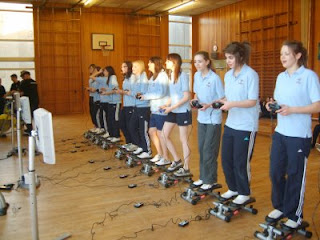
We are lucky to have a guest blogger, Richard Coshott of Gamercize, provide us a look at how active gaming is growing in popularity in the UK. What he has written below demonstrates the global attention active gaming is receiving in physical education classes. Thank you for sharing Richard:
When you think about Active Gaming (AG) you may be thinking about images of Wii Bowling in retirement accommodations, or maybe mom’s keeping up with a Jillian Micheal's fitness regime after the kids have left for school. Another perception you may have comes from the “gaming” aspect of AG, which gives the impression that it’s more of a “boy’s” activity. In my experience with my company Gamercize, I’ve found this is far from the case. Active Gaming is much more than this, and has a much wider appeal, global appeal in fact.
My company, Gamercize, works with many different types of active gaming users, including teachers and schools, and providers products and services to help every person be more active by changing sedentary screen time into active screen time.
One service we provide is a PE Teacher familiarization and training day, to bring PE and technology together, almost like a hands-on “Show and Tell”. These days are a great way to give us a chance to test out the reactions to different types of games, reaching out to new demographics, and acquire useful feedback from students. One event that appeared to offer different challenges was for a girl’s school. We took along a good selection of games, finding the Xbox 360 offered more variety than the PlayStation 3, that has predominately shooting or racing games. The fun part about the equipment we used was any game would work, the active part of the active gaming being to keep stepping to play.
The XBox 360 video game console supports 4 players, although most readily available and popular games available for them support two players per console. There are options for up to 16 players “linked” and countless social interactions available with online play. The cost per station is far more attractive for multiple players per console and the offline play mode makes it much easier for the teacher to be in control of the session without outside influence.
In the UK the adherence for girls in PE is generally lower than for boys, especially at the age range we had at this school, the teens. Some problems have been recognised and addressed, for example not mandating gym skirts and allowing sweat pants or shorts not appropriate for PE wear, but this group remains the most difficult to keep engaged in class. It’s difficult for teachers to keep to curriculum and progress the children if they only sporadically attend class; I was given the job of working out how to engage them more.
The easiest games to engage boys with are sports games, would the same be true for girls? Sports worked well, but it was clear the girls wanted more variety, so to engage the whole class we had to do a lot more. After changing games on the consoles a couple of times we settled into three different genres on all three consoles. Sports was still popular, fantasy racing won out over pure racing simulation and the last genre turned out best; fantasy adventure. This kept the whole class active and happy, and pleasantly surprised as they were expecting traditional gym work for the lesson, not active gaming!

What surprised me was about half the 16 year old’s in class had arrived not intending to take part in the expected gym class, with parental notes and the old “forgotten kit” excuses. I did wonder how many would have skipped PE had they known Gamercize would be there? From the feedback we had, the girls who were not planning to engage in the class appeared more keen on the active gaming class, with many asking if the equipment would be available next week.
One group that knew active gaming was coming to school was the teachers. After running the classes it is normal to use the equipment as an “ice-breaker” with the teachers and to wind down before reflecting on the lessons learned from the day’s classes. It was long past time to pack up and get on the road, but the competitive nature of PE teachers was overriding the message from the school clock. Of course do-overs were the order of the day as we battled it out with Super Monkey Ball Grand Prix.
The only other time you will see engagement over such wide demographics is with traditional sedentary video games. Although technology is not normally associated with the Physical Education department, the active version of video games looks very promising for attendance rates. The teachers certainly saw the appeal, which is always more conducive in a hands-on environment when the reactions of students can be seen first hand and the equipment tried out by all ages.
Monday, January 24, 2011
Exergaming Award Winners: TEN Network Reveals It ALL

In a previous blog, I discussed a survey released by the TEN Network awarding the top Exergames in various categories. Below are the results from the Survey as stated in the TEN Network blog post that you can find here:
The full results of The Exergame Network Awards 2010 are as follows;
- Best Children's Exergame - WINNER: Dance Dance Revolution Disney Grooves by Konami
- Best Physical Education Exergame - WINNER: Gamercize Pro-Sport for Wii
- Best Seniors Exergame - WINNER: Nintendo Wii Sports Bowling
- Best Accessibility Exergame - WINNER: Nintendo Wii Sports
- Best Home Dance Exergame - WINNER: Konami DDR
- Best Commercial Grade Dance Exergame - WINNER: Positive Gaming iDANCE2
- Best Exergame Fitness Avatar - WINNER: Wii Yoga
- Best Rehabilitation Exergame - WINNER: Nintendo Wii Fit and Wii Fit Plus
- Best Group Exergame - WINNER: Positive Gaming iDANCE2
- Best Gateway Exergame - WINNER: Nintendo Wii Sports
- Best Competition Exergame - WINNER: Gamercize Pro-Sport for Xbox 360
- Best Brain Exergame - WINNER: NeuroActive BrainBike
- Best Music in an Exergame - WINNER: Positive Gaming iDANCE2
- Best Commercial Exergame 2010 - WINNER: Positive Gaming iDANCE2
- Best Home Exergame 2010 - WINNER: Microsoft Kinect Sports
”The inaugural TEN Awards is a significant initiative to raise public awareness of the commercial grade Exergaming solutions available world wide and to honour the key pioneering manufacturers in this exciting health and fitness genre” says Brett Young, founding member of The Exergame Network and CEO of Exergaming Australia.
”The first ever TEN Awards is a great step in helping both consumers and healthcare professionals know where to start when trying to select (or recommend) an exergame for their particular need. The voting was from a wide array of exergaming enthusiasts from around the globe. I believe this is a great start and hope that this will encourage game developers and exergaming manufacturers to continue to produce great products and raise the field of exergaming” says Dr. Ernie Medina, Jr., DrPH, founding member of The Exergame Network, CEO of MedPlay Technologies, and the “Exergaming Evangelist/Interventionist”.
Sunday, December 26, 2010
Christmas Time: Affordable Active Games!

I previously wrote a blog about physical education teachers promoting active games over sedentary video game play as potential Christmas presents for children. I would like to simply extend that post and suggest just a few specific active games that are affordable, feasible, and easy to use:
Dance Dance Revolution - Multiple webistes provide multiple a variety of games and pads to fit your financial desire.
Nintento Wii Games - Sports, Resorts, Fit, etc...
Microsoft Kinect
Gamercize Steppers - compatible with multiple video game consoles (PS3, XBox 360, Nintendo Wii)
Virtual Bikes - A variety of video game bikes that offer residential pricing.
Xavix games - boxing, jackie chan, tennis
As quality physical education teachers - we need to make sure we are promoting healthy alternatives to the sedentary lifestyles in which many of our children are engaging in everyday.Suggest active games - not the traditional sedentary game! Inform parents, administration, and other teachers. It is a simply solution to replace sedentary screen time with more active play.
Monday, December 6, 2010
Integrating Active Gaming in the Classroom


Integration of academic material into the physical education classroom OR physical education content into the academic classroom is a well known strategy that quality physical educations teachers are not only aware of but do try to incorporate into the school curriculum. Considering 65% of children do NOT recieve any physical activity outside of school hours, it only seems appropriate that the physical education teachers get on board and begin advocating for more physical activity time during the school day. A major issue is that many administrators and classroom teachers believe more seat time is better and more effective. Unfortunately, recent research suggests this is simply not the case. Active Kids are Healthier Kids...Bottom Line!
Children that are moving more frequently during the day are proven to spend more time on task and consequently learn more efficiently. Is there something I am missing or should we not be getting our children up and moving throughout the day to improve learning....The No Child Left Behind Act is going to be left behind if we continue forcing children to be sedentary throughout the school day!
At the University of South Florida, researchers have started investigating the use of active games in the academic classroom. Active games are used as stations in the classroom before and after school, during bell work, after assignments are complete, and to "control" behavior issues. The teachers and students suggest the games are fun, effective in controlling off task behavior,and...guess what? Children are actually LEARNING!
Incorporating active video game play in the academic classroom is a great way for physical education teachers to integrate physical activity throughout the school day to accomodate for a lack of physical education time. There are many economical and appropriate active games (Gamercize, Dance Dance Revolution, Footgaming, etc.) that can easily be used in the computer lab or in the classroom as a station that encourages teachers to let children move while learning! If the children and teachers like it, AND learning occurs - why would we not want to encourage it?
Active Kids are Healthier Kids! Active Gaming is FUN, HEALTHY, and EFFECTIVE!
Monday, November 29, 2010
Healthy Christmas Presents For Children!

That special time is once again approaching! Black Friday has come and gone which means - Christmas time already! Many parents spend money buying children their favorite gifts and toys....guess what is #1 on many children's lists? VIDEO GAMES! Introducing children to the concept of active video games is a healthy alternative to sedentary video game play. As physical educators, it is important that we are able to make children and parents aware of healthy alternatives to sedentary toys and gifts. Physical education teachers may or may not have active video games in their classrooms; however, putting together a newsletter, parent letter, or website blog to educate parents and children about active video games is a great way to advocate for physical activity incorporating games that children desire to play.
Just to name a few economical and fun active games parents could consider: Nintendo Wii, Dance Dance Revolution, Microsoft Kinect, Gamercize, Sony Move, etc. Many of these are compatible with video game consoles (PS2, PS3, Nintendo, XBox, etc) children already have at home. Check out the PE Central Website for examples of active games that are appropriate, feasible active games for use at home in which may serve as excellent christmas gifts.
Monday, November 22, 2010
Executive Fitness Director Supports Active Gaming

Recently, the Executive Fitness Director, Shellie Pfohl, visited the University of South Florida's Active Gaming research labs to learn more about the research being conducted and to deliver a message regarding childhood obesity at the USF Education in Action Luncheon. See my previous blog about this event here. After visiting the labs, Shellie mentioned she believed active gaming was a "trend" that she would like to see increase in numbers in physical education programs and schools. During the presentation at the luncheon she suggested "...active gaming arcades like this are the future for physical education and they are part of a comprehensive physical education (P.E.) program." It was nice to hear Shellie discuss active gaming as a learning tool in physical education, not a replacement for skill and fitness development. See the full article about this visit and the luncheon presentation from the Oracle below and here:
Executive fitness director commends USF health research
By Michael Velez and Crystal Wilson, CORRESPONDENTS
Published: Monday, November 22, 2010
Updated: Monday, November 22, 2010 01:11
Shellie Pfohl, executive director of the President’s Council on Physical Fitness and Sports, visited Belle Witter Elementary to see how its gaming labs work.
At Belle Witter Elementary School in Tampa, students are actually encouraged to play video game during class.
That's because they're part of a new program developed by USF researchers to keep children physically fit — a trend Shellie Pfohl, executive director of the President's Council on Physical Fitness and Sports, said she hopes to see increase.
"I think active gaming arcades like this are the future for physical education and they are part of a comprehensive physical education (P.E.) program," she said during a lecture at the Tampa Fairgrounds.
Students attend the Witter Active Gaming Lab at least twice per week for 30-to 60-minute video game sessions that contribute to their physical education. All of the video games require movement.
In "Xavix Boxing," students strap on gloves that register their boxing movements. For "Gamercize" students stand atop stair-steppers and must remain active for the game to progress(LH).
In fall 2007, the School of Physical Education and Exercise Science received a $526,000 collaborative grant from the Centers for Disease Control and Prevention (CDC). The Active Gaming Research program received about $125,000 of the grant and used it to create the lab along with a donation from Gamercize including four steppers (LH).
"We purchased all of this active gaming equipment with the idea that kids are more motivated and engaged to be physically active when they can also play video games that they're playing at home and the like," said Steve Sanders, director of the School of Physical Education and Exercise Science. "It's a lot different than doing sit-ups and push-ups and running laps around the field, which kids don't like to do."
Pfohl, who was appointed to her position by President Barack Obama earlier this year, toured the school's Active Gaming Lab on Nov. 18. She said the program is valuable because it finds creative ways to target childhood obesity — a problem that "impacts our society in so many ways."
"No matter where you are, no matter what you do in life, childhood obesity should be important to you," she said.
Pfohl said that for the first time in human history, the life expectancy of children may be lower than their parents. The dangers of childhood obesity are obvious, she said, and the effects the epidemic have on society seldom receive enough recognition.
"If we do not look at their health now, my suggestion is that it will bankrupt us in the future," she said. "If this generation of kids is allowed to become more and more obese, when they hit the workforce, many companies will not be able to survive."
Pfohl said increased health care costs and a denigrated work performance directly resulting from obesity may one day sink our economy if nothing is done now to address the problem. The Witter lab gives young people a head start on a positive life, she said.
"To me it's the gateway behavior," she said. "Physical activity is the gateway behavior to so many positive things."
Lisa Hansen, an assistant professor for the School of Physical Education and Exercise Science and co-director of the University's Active Gaming Research Laboratories, said the first lab of this kind, the XRKADE Research Laboratory, was opened on the USF Tampa campus in December 2006.
"We're not suggesting (children) do this instead of traditional (P.E.). We're suggesting they replace the sedentary game time they already do at home and go to something natural," she said. "Moms and dads: go buy active games for Christmas. Don't go buy a ‘Toy Story' (video game) where they sit and play, buy the (version with a)Gamercize stepper, so they can still play ‘Toy Story' but they have to move."
Hansen said that apart from the workout, a major goal of the student's time spent in the lab is to teach them about the equipment they use.
"They don't come in here and just play," Hansen said. "There is a learning objective attached every single time."
Stacy Villagomez, a 10-year-old fifth grader at Belle Witter Elementary, said she has been coming to the lab since it was opened in January 2009. Her favorite game is "Dance Dance Revolution," in which a floor mat registers dance moves players are instructed to perform.
"In my other classes, after I come here, I feel energized, I feel happy and I feel like I had a workout," she said.
Ismael Rivera, who is also a 10-year-old fifth grader, said he was thrilled when he first found out that he would get to play video games at school.
"I've been coming to this center since last year," he said. "I thought that it would be awesome, because first P.E.'s all about exercising and getting your heart rate up, and when (our P.E.) coach put in all of the games inside the game room, it made sense. You can play the games at the same time you exercise."
Thursday, September 30, 2010
Criticism #7: Children Will Get Bored!

The last but certainly not least important criticism in this series of seven posts is that “Children will simply get bored of these activities too quickly”. Sustainablity is another concern for some teachers and parents. The notion that playing any activity too long and in the same way becomes less appealing and motivating may be true. They key to sustainability in a quality physical education program is effective, developmentally appropriate implementation strategies. In more simple terms, avoid using an active game “…too long and in the same way.” For example, must teachers would agree that throwing a ball to a target from a cone for extended periods of time will get boring for children. However, if I change the target to “blue”, move the cone back a few steps, or challenge the students with a “game” while still focusing on the same skill of throwing, we have now created an entirely new, appealing, and enjoyable task. The use of active gaming in the physical education classroom should be viewed in the same manner.
Additionally, many active games are compatible to a traditional game console (Nintendo Wii, Sony Playstation 2 and 3, Xbox, etc.) allowing children to choose a variety of games in which to play. Some active games even allow children to plug the equipment to their computer and expand game play online.
School systems should understand that an appropriate instructional environment for active gaming is essential in order to promote the most effective learning and motivating experiences for children. Teachers should have training as well as personal practice on all purchased active games before including these activities in the curriculum. Using active gaming as a tool to accomplish learning objectives can be successful to sustaining the attentions span of children. However, using active gaming as a replacement for quality instruction or just as a fun game does not foster sustainability. After all, even the coolest video game such as Pac Man drops in sales at some point!
Monday, September 27, 2010
Criticism #6: Durability is Problematic

The 6th criticism of this series of seven blog posts discusses the issue of the durability of active games being problematic. Some have suggested active gaming is problematic due to the lack of reliability in terms of durability of the technology. Whether you are on a computer, using a cell phone, using an IPod, or trying to set your DVR, the chances are that at some point technology is going to “break down”. Most active games are purchased with a warranty with an option to extend the warranty. This provides the needed security to extend the life of the equipment. Understanding the terms of the warranty as well as options for extending a warranty are important when purchasing any active gaming product.
A major concern to consider when purchasing any active gaming technology is the manual assistance and/or servicing to care for typical “trouble shooting” situations. Some problems that occur with active games are not related to the durability of the product but the typical technological issues that are found with many forms of technology. Simple troubleshooting instructions should be available and requested for each active gaming product in order to assist with the more common problems (tv channel is wrong, game “freezes”, feedback is not registering, intensity level is turned too high etc.). Additionally, school systems should be prepared to have someone appointed to not only care for the purchased products, but to have open communication lines with the company or companies that have supplied the equipment. Any questions regarding the servicing of products should be considered and discussed prior to making any purchase. This is very important in order to understand the responsibility of the buyer and that of the seller including time considerations, replacement alternatives, and all potential costs involved.
Without discussing individual manufacturers or specific products it is safe to suggest that there are many durable products provided by the active gaming industry. Regardless, it is the responsibility of the buyer, especially when children are involved, to resolve issues as quickly as possible to avoid any disappointment or negative feelings towards the physical activity experience. Being prepared by understanding the technology component involved with the active games purchased will help reduce the likelihood of this issues occurring. Having been involved in this field for close to six years now, the #1 issue related to active gaming durability is certainly "Human Error". Not that we break the product, but that we do not understand the simplicity of why it may be acting a particular way. It may not be "broken" just yet...Ask Questions, Get Educated!
Thursday, September 23, 2010
Criticism #5: Active Gaming Takes Up Too Much Space

Finding the space to allocate active gaming activities at home or at school is the 5th critique of active gaming in this series of seven blog posts. Common questions include, “Where and how do we store the games when they are not being used” and “Where do we place the screens if we do not have wall space?” “Where will we find space in the school to set up the equipment?” All are reasonable questions and should be considered when pursuing an active gaming environment.
Active gaming equipment does not have to take up a lot of space. Consider the following related to space allocation and active gaming. First, designate a space to place the active gaming equipment that will not require the teacher to remove the activities daily. Delegating a room or small area in a specific permanent location in the school is ideal but certainly not necessary. Another option is to use a moving cart. A screen and game console can sit on the cart and the activities can be rolled or moved into the gym or classroom as needed. A third suggestion is to purchase a mobile or modular commercial unit. These units house the screens, consoles, and cords.
Additionally, consider turning children’s sedentary screen time at home into more active screen time, see criticism #2. Research suggests there are four televisions in the average household. Making at least one of these televisions an active gaming station is not only feasible but a great way to increase physical activity outside of school hours and decrease sedentary screen time.
Furthermore, some active games are compatible with a computer. Having a computer station in an academic classroom, computer lab, school library, or at home is a great way to turn sedentary computer time into more active computer time. The active games compatible with computers (i.e. Gamercize steppers, FootGaming pads, Plug -n- Play games, etc.) are easily stored under a desk or against a wall.
Space allocation may be a concern but should certainly not discourage the use of active gaming in the physical education classroom or at home. Determining the type of space you have available is an important first step when considering the purchase of active gaming activities. The space you have abailable will most likely influence the active games you are capable of purchasing.
Monday, September 20, 2010
Criticism #4: Active Gaming Breaks the Piggy Bank

The 4th criticism regarding active gaming being discussed in a series of seven blog posts is "Active Gaming Breaks the Piggy Bank". This critique suggests that active gaming is too expensive and not necessarily feasible to consider in the physical education classroom. While there is certainly merit to this critique, let me discuss and share available,reasonable active gaming alternatives:
Active gaming has been identified as being an expensive investment and many parents and schools may deem the expense to be unrealistic. School administrators would understandably need to make decisions related to costs versus the benefits. However, there are active games that are affordable. A variety of Dance Dance Revolution pads are available for under $20.00 a pad and active games such as the Gamercize steppers, Nintendo Wii, Xavix Sports, etc can be purchased for under $300.00 each. Additionally, depending on the active game selected (Gamercize, Cateye GameBike, Nintendo Wii, etc.) the activities are compatible with multiple video games which fosters sustainability with children. Therefore, after the investment in the equipment, the type of game played can continue to change providing a higher return on investment. Creating a full functioning active gaming room may not be a reasonable task immediately; yet, taking small steps toward this goal to continue to add new activities each year or as funding is available is feasible.
At home, research suggests over 90% of children play video games or computer games. Considering many active games are operated using a traditional game console (Nintendo Wii, PlayStation2, PlayStation3, Xbox 360, etc.) or through online game play, the gateway for children to be active in their homes is increasingly available.
Schools will find that there are several funding initiatives available that can provide resources for purchasing this technology. The federally funded Carol White Physical Education Program Grants provide physical education programs with funding in amounts ranging from just over $100,000 to nearly $600,000 (United States Department of Education, 2009). These grants are specifically targeted for the improvement of physical education programs and can provide funding to facilitate such program initiatives. The Robert Woods Johnson Foundation grants for the prevention of childhood obesity (Robert Woods Johnson Foundation, 2009) also has funding based initiatives that not only look at increasing physical activity levels among children and adolescents but also at the impact of active gaming on these variables. State and local funding is also available for physical activity and technology initiatives providing multiple possibilities for funding active gaming equipment.
Monday, August 30, 2010
User Engagement: Engage Them then Educate Them
My husband recently presented at The World Congress Annual Leadership Summit on Mobile Health (mHealth) in a workshop titled "Consumer Engagement Through New Media - Mobile, Video Gaming and Virtual Worlds”. The more I have learned about this workshop, the more I have realized another way to understand active gaming in physical education. Have you heard of the term consumer engagement (CE)? The presenters in this workshop discussed the importance of CE in the 21st century in terms of getting consumers engaged (in a product or brand) in order to sustain, maintain, and retain them ultimately enhancing a business. My husband said, “Really that’s what it sounds like active gaming should be in physical education – but more like user engagement. Engage the kids then educate them.” Coming from a business mind and someone that still thinks dodge ball (the big red ball that eliminated the same kids each game) was the greatest game ever in physical education; I was hesitant to admit that he was absolutely correct. User Engagement….engaging the users or what we consider to be our students first! Then educate them about living a healthy lifestyle. After all, in the academic classroom teachers must triumph in engaging the students attention in areas such as math, science, or history in order for the students to perform successfully.
In a previous blog the importance of entertaining individuals during exercise, exertainment, was discussed. Additionally, the concept of children wanting to play and have fun being their top priority was discussed. If children do not enjoy the task, they will not continue doing it. Make it fun, and they are likely to continue the task. Children love technology, especially video games. They are appealing, motivating, and most importantly, engaging! Active gaming is a great tool for physical education teachers to use in order to engage the users (students) then educate them. Once students are active and realize exercise is enjoyable, physical education teachers can then teach students the value and importance of exercise as well as develop the necessary skills and confidence needed to maintain an active and healthy lifestyle into adulthood.
Active gaming "user engagement" – I like it. Engage them then educate them. Sounds like successful 21st century teaching and learning!
In a previous blog the importance of entertaining individuals during exercise, exertainment, was discussed. Additionally, the concept of children wanting to play and have fun being their top priority was discussed. If children do not enjoy the task, they will not continue doing it. Make it fun, and they are likely to continue the task. Children love technology, especially video games. They are appealing, motivating, and most importantly, engaging! Active gaming is a great tool for physical education teachers to use in order to engage the users (students) then educate them. Once students are active and realize exercise is enjoyable, physical education teachers can then teach students the value and importance of exercise as well as develop the necessary skills and confidence needed to maintain an active and healthy lifestyle into adulthood.


Active gaming "user engagement" – I like it. Engage them then educate them. Sounds like successful 21st century teaching and learning!
Subscribe to:
Posts (Atom)